VR and games
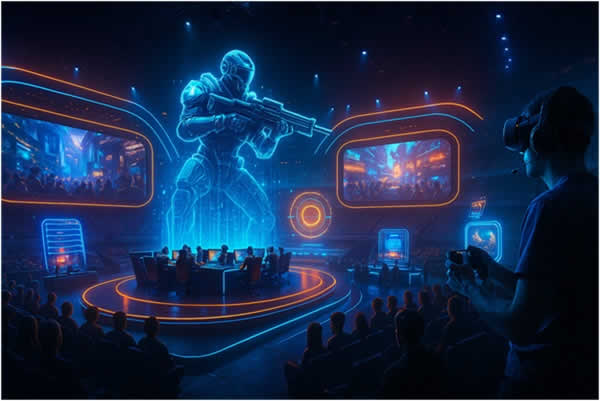
When you walk into an esports arena in 2025, it no longer feels like a rebranded sports hall. It feels like stepping into the future. From giant holographic displays to immersive fan zones, these stadiums are designed around digital culture, not simply adapted from old models.
This fast shift mirrors the way entertainment platforms keep adapting to fans’ needs. Digital hubs such as
https://kw.1xbet.com/en have shown how important speed and reliability are for today’s audience. Esports arenas use the same principle—frictionless access, rich data, and always-on connection. The result is a new type of stadium where screens, sensors, and spectators are part of the same network.
Size, scale, and money
The numbers speak volumes. Prize pools for major events cross $40 million. Single tournaments draw live audiences of 50,000 and online streams of millions. Stadium builders are reacting. They are no longer thinking in terms of local halls but designing spaces that rival football arenas in size and spectacle.
Technology shaping fan experiences
Fans no longer just watch. They interact, test gear, and step into VR zones between matches. Arenas now resemble theme parks for gamers.
Core technologies shaping esports arenas:
- Augmented reality projections on stage.
- Live biometric stats from players displayed in real-time.
- VR headsets for fans to view matches from player perspectives.
- Holographic replays that can be rotated in 3D.
- AI-powered commentary in multiple languages.
Beyond the main stage
One striking difference in 2025 arenas is the spread of experience outside the core match. Fans explore exhibition halls, training simulators, and sponsor pavilions. Merchandise areas are linked with NFC tags so purchases take seconds.
In-venue fan services
| Service |
2020 Common |
2025 Common |
| Free Wi-Fi |
Limited |
Standard |
| Interactive fan zones |
Rare |
Core feature |
| VR experiences |
Pilot only |
Full scale |
| Smart seating |
None |
Sensors + data |
| Cashless payment |
Optional |
Default |
The stadium is no longer a building. It is a digital ecosystem.
Economic ripple effect
Esports arenas bring cash to cities that host them. Hotels, restaurants, and transport systems benefit from tens of thousands of fans. Global tournaments bring tourists from across regions. The local economy expands every time an arena hosts a final.
Economic benefits of esports arenas:
- Tourism revenue during major events.
- Long-term infrastructure investments.
- Global visibility for host cities.
For context: Seoul’s esports district reported $1.2 billion in added revenue tied to arena-driven events in 2024.
Traditional sports stadiums focus on physical play. Esports arenas focus on hybrid experiences. Yet both share one element: community. What differs is the type of data each builds around fans.
Comparing stadium models
| Feature |
Traditional Stadium |
Esports Arena 2025 |
| Core activity |
Physical sport |
Digital competition |
| Fan engagement |
Cheering, chants |
AR, VR, online polls |
| Revenue streams |
Tickets, food |
Digital add-ons, merch |
| Infrastructure updates |
Slow cycles |
Constant upgrades |
| Broadcast model |
TV-led |
Streaming-first |
The contrast shows why tech lies at the heart of esports growth.
Data as the new currency
Every fan entering the arena connects with digital ID. Purchases, cheers, and interactions become data points. Organizers analyze these in real-time. That analysis helps adapt events mid-stream. Food stands restock instantly. Digital merch bundles get promoted when sales spike.
How data changes events:
- Predictive crowd flow analysis.
- Personalized sponsor offers.
- Real-time adjustments to services.
- Improved security tracking.
- Insights for future tournament planning.
For fans, it means smoother events. For organizers, it means better margins.
Regional dynamics
Not all regions adopt the same way. Asia-Pacific leads in scale and number of arenas. North America focuses on tech integration and showbiz. Europe emphasizes sustainability. Latin America grows through partnerships with telecom firms.
Regional esports arena trends 2025
| Region |
Arena Focus |
Notable Feature |
| Asia-Pacific |
Massive scale |
Multi-level arenas |
| North America |
Entertainment fusion |
Celebrity partnerships |
| Europe |
Eco-sustainability |
Green building codes |
| Latin America |
Telecom-driven expansion |
Low-cost mobile access |
| Africa |
Education and community use |
Multi-purpose venues |
This diversity shows there is no one-size blueprint. Each region bends design to culture and demand.
The beginning
Esports arenas are more than stages. They are living laboratories for technology, data, and fan culture. 2025 feels like a line crossed, where arenas no longer mimic sports halls but set their own rules.
Fans don’t just sit in chairs. They stand inside a digital wave. Their cheers merge with live data streams, holograms, and VR replays. It is sport, entertainment, and tech fused into one beating heart.
And like any good arena story, it is only the beginning.
Click here to read full news..


